

Drones with cameras have become one of the most sought-after gifts for children. The market offers a variety of options especially designed for young users, with safe, easy-to-handle models equipped with cameras to capture their adventures.
This article is a comprehensive guide to help you choose the best drones for kids with cameras, taking into account essential features such as durability, ease of use, safety, and, of course, image quality.
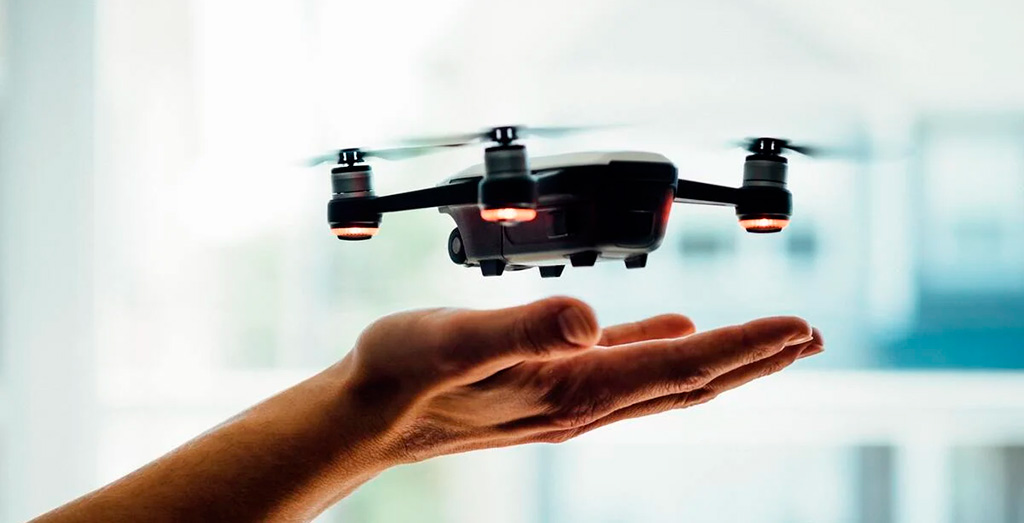
Below, we present a comparison of ideal drones to help children begin exploring this fascinating world safely and enjoyably.
What features should a kids’ drone have?
Choosing a suitable drone for children involves considering certain factors that ensure both safety and ease of use. A good beginner's drone should be lightweight, durable, and have features that make it easy to control to avoid accidents and falls.
Next, we examine the key features to consider when selecting a drone for young users.
Ease of use
A drone designed for kids should be easy to operate and not require advanced technical knowledge. Recommended models usually feature automatic takeoff and landing, flight stabilisation, and altitude hold.
These features allow children to learn to pilot without complications, reducing the risk of accidents.
Durability and resistant materials
Since the drone will be handled by children, it should be sturdy enough to withstand bumps and falls. Most kids' drones are made from durable plastic materials and include propeller guards, which help minimise damage in case of collisions.
This feature is essential to ensure the drone has a long lifespan.
Camera quality
While children's drones usually do not come with high-resolution cameras, many models offer sufficient quality to capture fun images and videos. A 720p or 1080p camera is suitable for kids to experiment with aerial photography and record their adventures.
Some models even allow for real-time streaming, adding an extra layer of excitement to the experience.
Safety features
Safety is paramount in a kids’ drone. Some models include features such as automatic return-to-home, emergency shutdown, and altitude and distance limiters.
These functions help prevent the drone from getting lost or going out of control, providing peace of mind for parents and making it easier for kids to learn.
Comparison of the best camera drones for kids
In this comparison, we present some of the best drones for kids with cameras available in 2024.
Each model has been selected for its ease of use, durability, and image quality, making them ideal choices for young users to enjoy the experience of flying a drone and capturing their own videos.
Potensic A20W Mini Drone
The Potensic A20W is a compact and easy-to-operate drone, ideal for kids and beginners. Its lightweight design and 720p camera make it a great option for those looking to experiment with aerial photography.
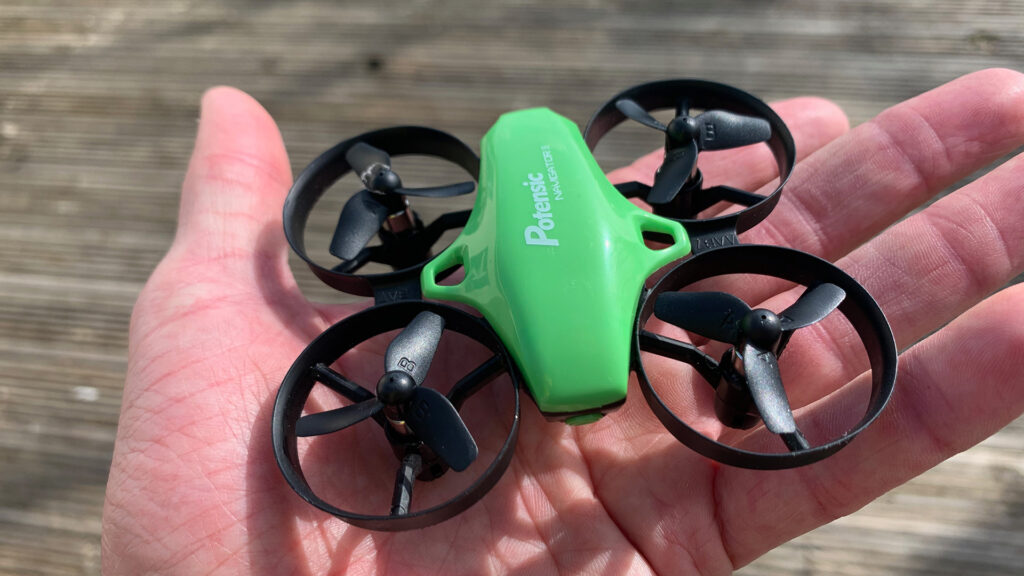
Additionally, it includes altitude stabilisation and an altitude hold mode to make control easier.
Advantages of the Potensic A20W
- Flight stabilisation: Thanks to its altitude control, kids can keep the drone stable without much effort.
- Compact size: Easy to transport and store, ideal for indoor use.
- Automatic takeoff and landing: Makes control easier for inexperienced users.
Disadvantages of the Potensic A20W
- Limited camera quality: The 720p resolution is basic and suitable only for simple captures.
- Moderate battery life: Offers between 6 and 8 minutes of flight time, so it’s advisable to have additional batteries.
Ryze Tello
The Ryze Tello is an affordable and robust drone, designed in collaboration with DJI and aimed at kids and beginners. This model has a 5 MP camera and is compatible with smartphones, allowing children to control the drone via an app.

It also offers good stability and features like automatic takeoff and landing.
Advantages of the Ryze Tello
- Acceptable image quality: 5 MP camera allows for capturing basic photos and videos.
- Mobile control: Easy to operate via a smartphone app.
- Educational features: Compatible with Scratch programming, introducing kids to basic coding concepts.
Disadvantages of the Ryze Tello
- Limitations outdoors: Lacks GPS, which may affect stability in windy conditions.
- Short flight time: Provides around 13 minutes of battery life, which may be limited for longer sessions.
Holy Stone HS210
The Holy Stone HS210 is a mini drone without a camera but with excellent features for learning to fly. Its stability and automatic functions make it ideal for kids who want to learn to pilot safely and enjoyably.

Although it lacks a camera, its robust design and features such as headless mode make it an excellent entry-level choice.
Advantages of the Holy Stone HS210
- Altitude hold function: Allows kids to keep the drone at a constant height.
- Propeller guards: Its propeller protectors help reduce damage in case of crashes.
- Headless mode: Simplifies control, ideal for beginners who have yet to master drone orientation.
Disadvantages of the Holy Stone HS210
- No camera: Although easy to fly, it does not allow for photo or video capture.
- Limited battery life: Each flight lasts around 7 minutes, so it’s recommended to have additional batteries.
Snaptain SP350 Mini Drone
The Snaptain SP350 is a simple and fun drone, perfect for kids looking for an affordable and easy-to-control option.
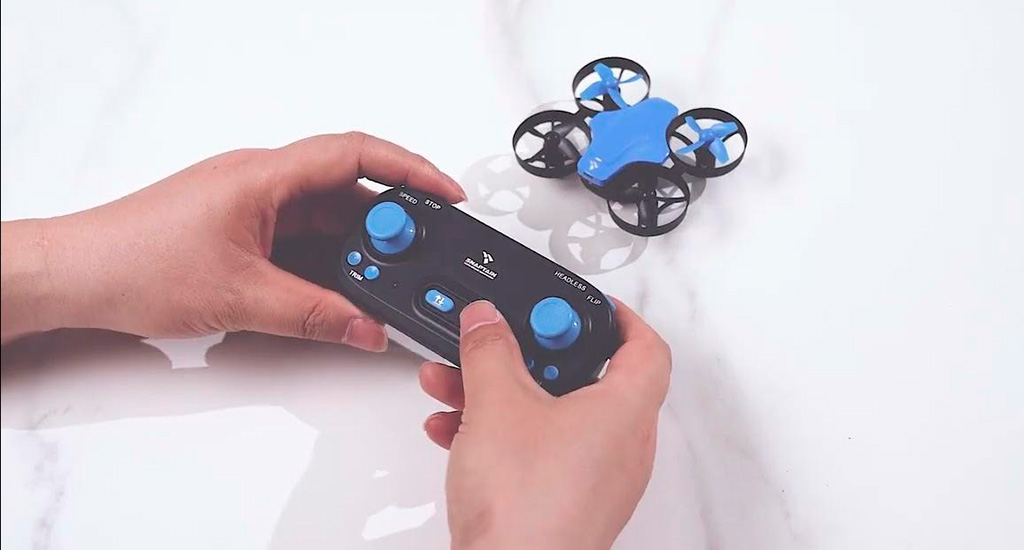
It features automatic takeoff and landing, as well as an altitude hold system that helps children control the drone with ease.
Advantages of the Snaptain SP350
- Headless mode: Facilitates control of the drone regardless of its orientation.
- Perfect for indoor use: Its compact size and light weight make it ideal for flying indoors.
- Automatic takeoff and landing: Perfect for beginners seeking easy control.
Disadvantages of the Snaptain SP350
- No camera: Though a good starter drone, it does not allow for photo or video capture.
- Short flight duration: The battery lasts around 6 minutes, which might be insufficient for longer sessions.
Price comparison table
Below is a price comparison of the drones mentioned above:
| Drone | Approximate price |
|---|---|
| Potensic A20W | €50 |
| Ryze Tello | €100 |
| Holy Stone HS210 | €40 |
| Snaptain SP350 | €35 |
These prices are estimates and may vary depending on the retailer and available offers at the time of purchase.
Tips for safe drone flying with kids
Flying a drone can be a fun and educational activity for kids, provided certain safety guidelines are followed.
Below, we offer some tips to make the experience safe and enjoyable.
Fly in open, clear areas
It is advisable to fly drones in open and obstacle-free areas, such as parks or fields. This reduces the risk of accidents and allows kids to practise with ease.
It is also ideal to avoid flying on windy days, as this can make drone control more challenging.
Always use propeller guards
Most kids' drones include propeller guards. These accessories are essential for protecting both the drone and the surroundings and are especially useful for indoor flights, where collisions are more frequent.
Supervise kids during flights
While many drones are safe and easy to use, it’s important for an adult to supervise children while flying. This ensures responsible usage and helps resolve any issues that may arise during the flight.
Choosing the best drone for kids involves considering factors such as ease of use, durability, and safety features.
With these recommendations, you’ll be able to find the ideal model that allows young users to enjoy a fun and safe flying experience.
Leave a Reply